Wednesday, August 16, 2006

BACK TO ROME

I need to blog Vegas but it's so big I don't know where to start. Since I blogged Florence and Venice last year and skipped Rome, I thought maybe I should complete the last one before starting a new one.
--------------------------------------------------------------------------------------------------------
Since Rome was ending our trip, I thought we should try a nice B&B and Trip Advisor pulled up 69 Manin Street. The good news was that all of the reviews loved it. The only drawback was that it was a few blocks from the Train station which is a faster part of town and not in the center of the activities. Since I liked the reviews and really didn’t know which part of town was best since the activities themselves are spread out I took a chance.

They had a great selection of breakfast food and an upscale coffee vending machine that offered most of what you’re use to from the Starbucks menu. The room had satellite TV and since no more than 2 channels spoke English, they had over 100 DVDs that did. The only negative was that they misunderstood our email and were late is meeting us to check in.

The place was owned by a couple our age, though we only met the female end. Her “man” as she called him had a regular job and she worked the business. She was very meticulous and although she was rated 2nd or 3rd out of 80 places on Trip Advisor (currently ranked #12 – she must be having a fit) it bothered her that someone complained that she didn’t have a breakfast area and had to eat in their own room. She told me that she was leaning toward gutting one of the guest rooms to provide a breakfast place. I tried to talk her out of it. Why give up the revenue of the extra room. I bet most people don’t care and would rather pay less than subsidize the breakfast nook.

She asked me on the second day if I like George Bush and I said yes. She said that I was the first American to stay in her place that said so since she bought the place two years prior. I have to figure that at least one other traveling American likes Bush, but they were just afraid to admit it to a European. It turned out that she actually likes Bush a great deal as well as the then current Prime Minister Berlusconi whom she predicted correctly would lose re-election. She said that most people are just ignorant about terrorism and the world was lucky to have Bush to lead the fight. She and “her man” wanted to sell the B&B in a few years and move to California. They want to be Americans.

On our first Friday in Florence we witnessed the General Strike that closed down most attractions and featured little socialists roaming the streets some with Soviet flags. It seemed like a funny thing. The second Friday in Rome was bit less so, especially when we were packed in a Roman subway station and some Bolshevik set off a firecracker. I saw a woman yelling at her husband because the commie flags and signs were littering the stroller and the wife was tired of carrying the baby. I also saw a guy parading around with one of those nude blowup dolls. I’m not sure if that was some sort of counterculture statement or just the option of quick relief in the restroom. The overall effect of seeing this really bothered me. Here’s a country that embraced the fascism of Benito and was now embracing Lenin. Also troublesome was that every newsstand had a copy of a recent Che biography and that Che shirts and signs were everywhere even in non-strike days. It seemed that the main point was an anti-American one which I expected somewhat, but I didn’t see any of this sort of thing in 2003 in Amsterdam, Belgium or Germany. I felt like a character from the movie Barcelona.

Rome was an overall disappointment, especially since I have wanted to go there my whole life. It’s dirty almost everywhere, the gypsies are a bother and the attractions were mostly underwhelming. The touristy things like the Spanish Steps, and Trevi Fountain were actually fun little places to visit if you don’t mind the sideshows.
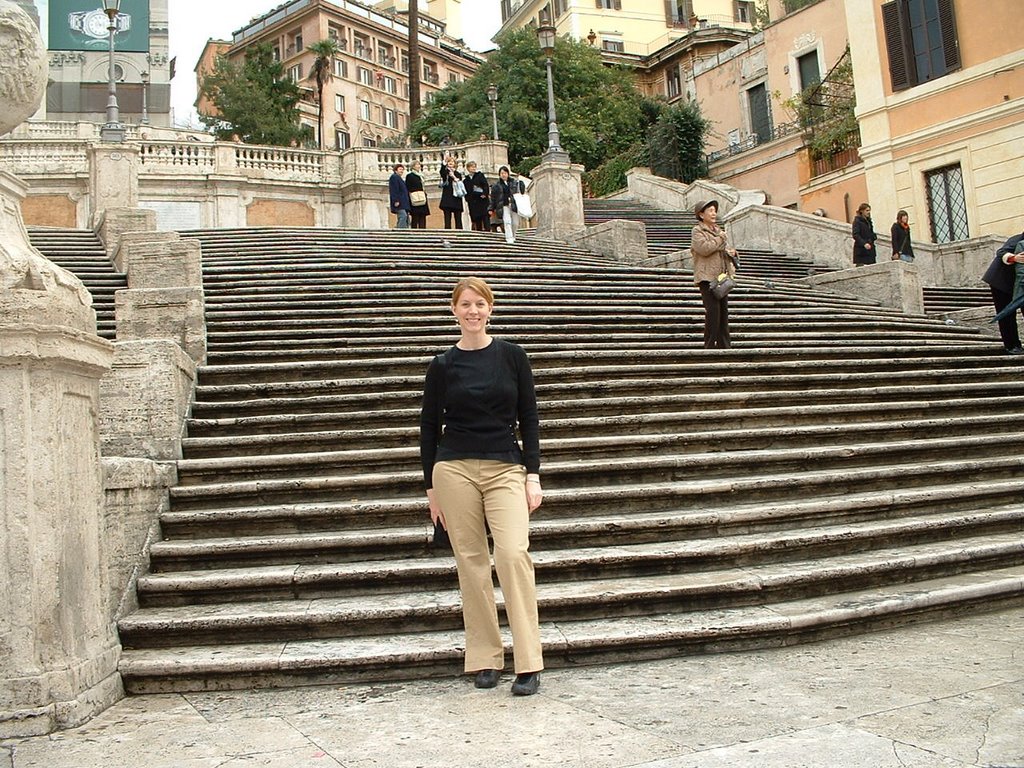
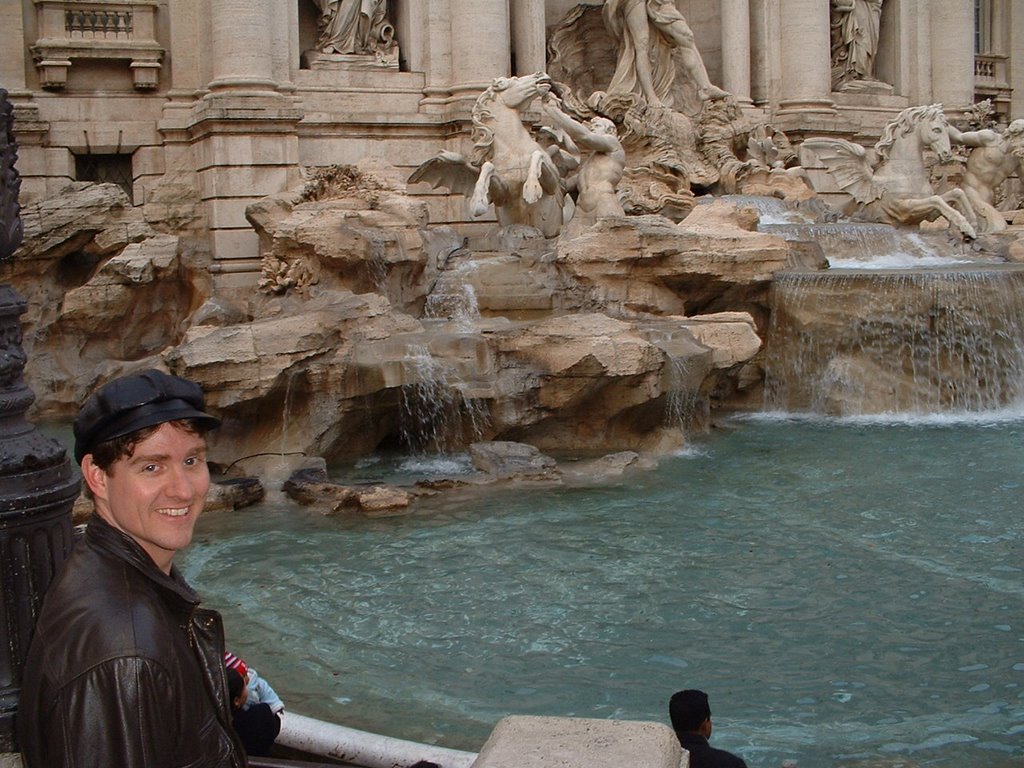


Not far from either attraction were guys dressed up as gladiators that will pose with you for a price and Bangladeshis trying to sell you wilted roses and Polaroids.

The historical things were a mixed bag. I enjoyed the Coliseum the most. It had a good audio tour and you could really imagine the action back in the day.
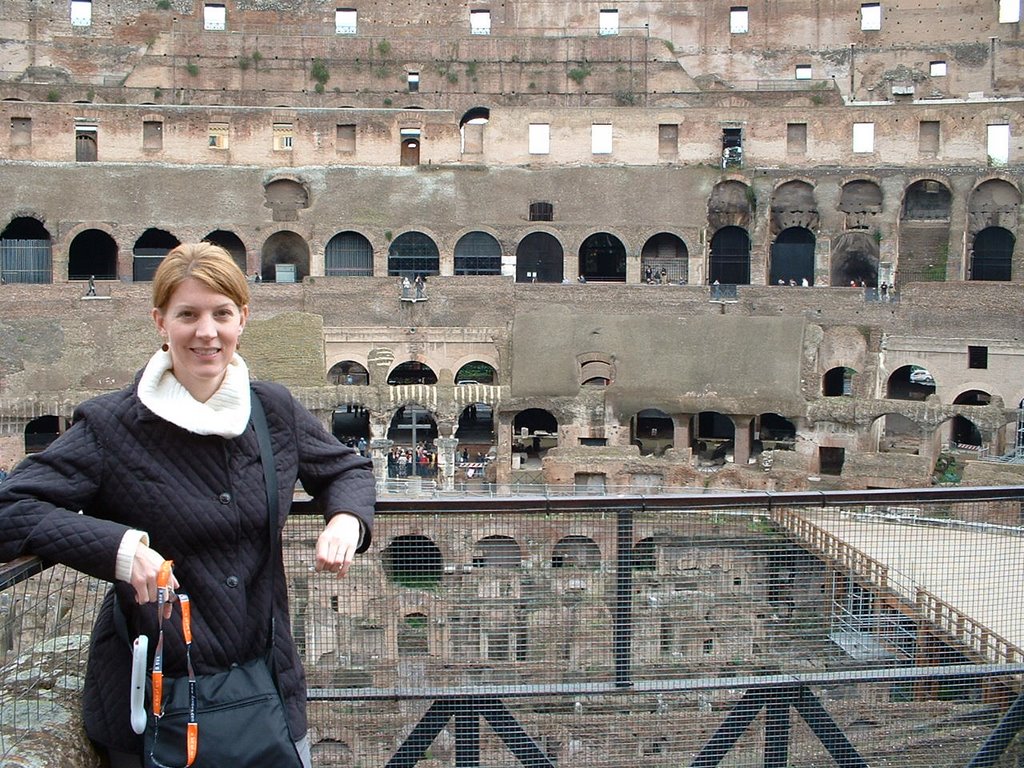


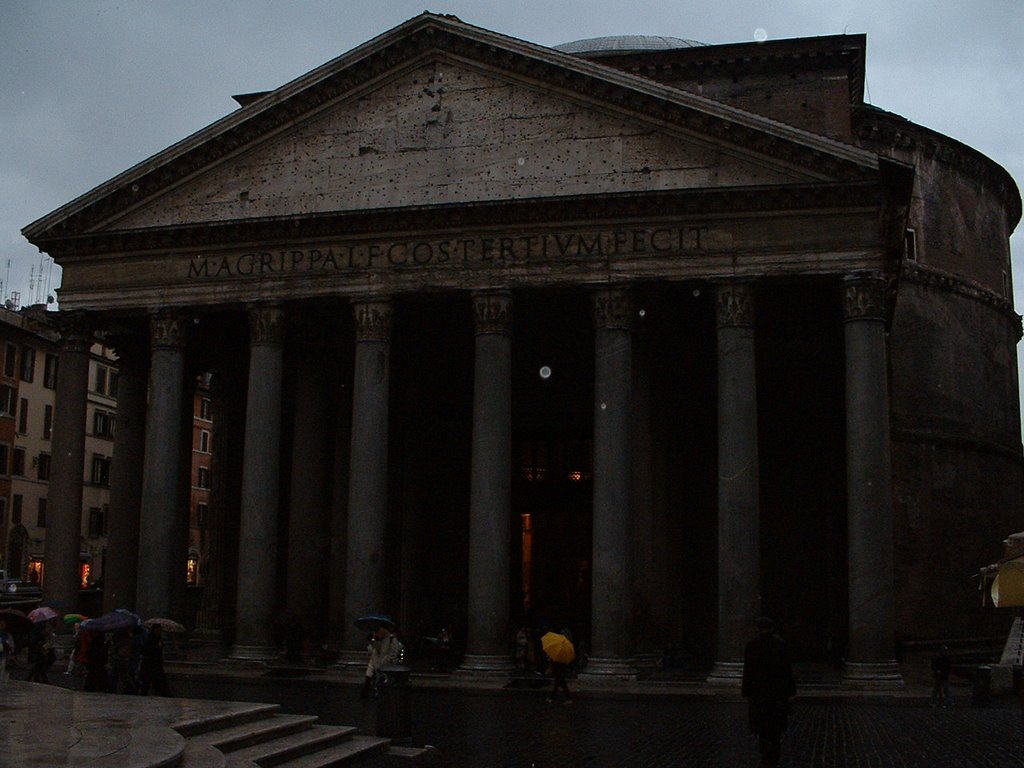
Palatine Hill, The Forum, the Circus Maximus were an education but redundant. The Pantheon was mostly interesting for how old it looked. McSorely’s Old Ale House in New York City has been opened since the 1850s and has the look of a place where grime has just absorbed into every crevice. The Pantheon looked like that to the extreme. Parts of the Tower in London are 1000 years old and look fresh and new compared to the Pantheon.


Although I had always wanted to see the Sistine Chapel our earlier ventures into Italian art in Florence made me less excited when the time came. The Chapel lets in only a select amount of people and they make you wander through hall after hall of less interesting artwork to get there. When we got into the actual chapel part every seat around the perimeter was taken and my sore back felt the pressure as I listened intently to the audio tour. The Michelangelo ceiling looked as great as in the photos and the drawings on the walls from lesser art figures couldn’t live up to it. It really looked like teacher and student. Even the well-respected Raphael didn’t impress me compared to Michelangelo. And to think they guy considered him self a sculptor and had to be bribed into painting the thing. At the same time, the greatness of the work didn’t surprise me like David back in Florence. They were what I expected.
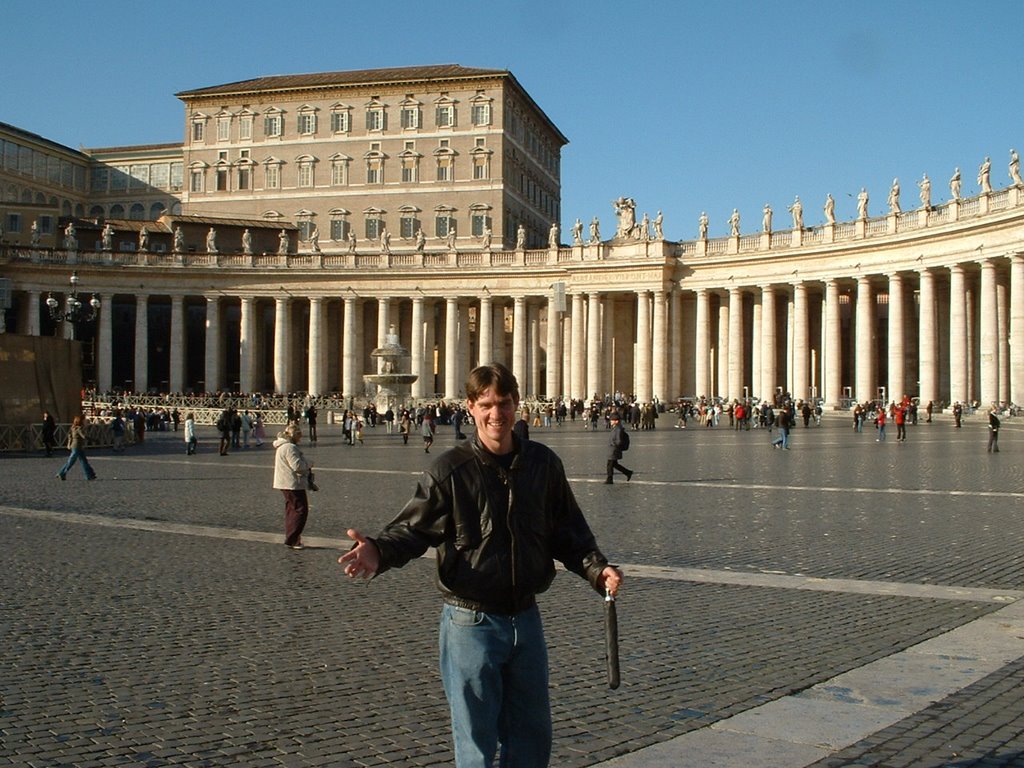


A pleasant surprise was visiting this castle after we left the Vatican. There wasn’t much of a crowd and it offered great views of the city. We stayed up there for a while drinking Italian beer and looking over the side. There were some people on the ground just enjoying the day. Some young men were kicking around a metric football and another family was playing fetch with their dog. At some point the dog returned the fetch ball to one of the footballers and he kicked it out of his way not paying attention and the dog took it as the game continued. We both laughed when we saw it happen and those on the ground stopped and looked up at us which made it funnier.


Wine is so cheap everywhere. In the grocery store some wine could be had for Coca Cola prices. They had Grappa for as much a 30 Euro and as little at 4. I bought a bottle for 6 and it tasted like turpentine. I bought some Spumante for 4 Euro and it tasted great. Cheese was a lot cheaper too and we ate it plenty. Funny thing was the Peroni beer was no cheaper there than here. When you ordered it from a bar they usually included a bowl of potato chips and a dish of olives. I bought a 3 Euro draft and I think I ate 3 Euro worth of olives.

Although I grew tired of German food in 2003, I never got tired of Italian cuisine. The best part as we learned was that it was all good and the price you paid mostly had to do with location and view. So after the first night in Rome eating by the Pantheon, we spent the next 4 nights supping in the restaurant 2 doors down from the hotel and it was the least expensive place we went in Italy and no disappointment. It was a Mom & Pop called Ristorante Santi. We tried the pasta, pizza, bruschetta, steak, risotto, and it all met the test. By the end of the week they were treating us as old friends to boot.

The most bizarre situation happened on the last day when we were sitting in the Coliseum area and a Bangladeshi approached us to buy some silver Jewelry. I didn’t have a lot of cash left and didn’t want to make another ATM stop before the plane home and kept trying to shoo him away. He began by trying to sell us 1 piece for 25 Euro and ended with 3 for 10 Euro and Trish rationalized that she could maybe give them as Christmas gifts (I don’t think she did) so I said okay and gave the guy a Ten spot.

That was no sooner done and this lady started screaming at us for buying the stuff. She had a little flea market like table setup not far away trying to peddle miniatures of the Coliseum, David and such. She was tall and looked a little gypsy-like. The man with her was short and reminded me of an Italian Bob Hoskins. She went on about how they paid for their spot and the Bangladeshis had no right to trespass, but instead of taking it out on those guys, she was yelling at us and demanded that we leave or she’d call the cops. Now while I don’t know every Italian law I surmised that no cop is going to harass a paying tourist for buying a piece of silver jewelry and I refused to move. She and the runt were yelling and screaming at us to leave and we yelled back and stayed put. It was surreal to say the least and for the hell of it I decided to snap a photo of the little guy who didn’t like it one bit as shown.
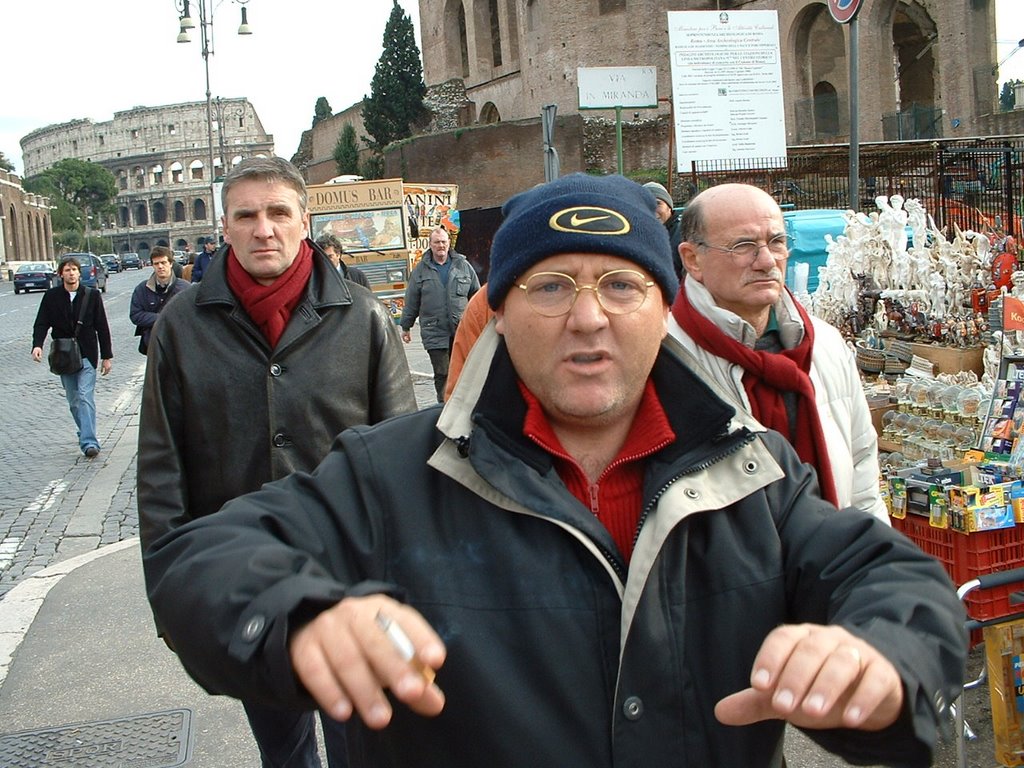


We probably sat around ten minutes longer than we wanted simply to see if they would actually call Polize which they didn’t.

Earlier in the week we had another brush with gypsies when a mother and her two preteen daughters walked up to me trancelike as I was reading a tourist map. The girls each tugged on either arm of my jacket and the mother was holding the box, I suppose for the loot, but Trish who saw this before me was the hero and yelled at them harshly to leave and they cowered away with not a penny for their troubles.

We also saw a gypsy in a grocery store paying with change and it reminded me when I broke my penny bank to buy the Star Trek action figures in 1976, the only difference was that she paid mostly with pennies.



A great thing about the trip was that it was so relaxing that I read the five books I brought before we made it to Rome and I had to find an English language bookstore to re-stock. My mind had been so cluttered for months that I was having trouble concentrating enough to read and here I was flying through pages on the trains and just before bedtime.

On the plane trip over we sat next to an Italian girl from Naples which was interesting because the plane was actually connecting in Atlanta and she was probably the only other person on the plane heading to Rome. She worked at Alfredo’s restaurant in Epcot and she told us that the original one is in Rome and it would be the only place in the country that we’d find Alfredo sauce. She said Americans all think it’s typically Italian, but that they never eat it. She was dead right. Not one place on the whole trip offered Alfredo. We did stumble upon the original restaurant heading to the Pantheon our first night, but we didn’t venture in understanding it to be overpriced and not even authentic.

One thing that I wanted to do is get Trish and I posing in front of the Mouth of Truth as seen in Roman Holiday.


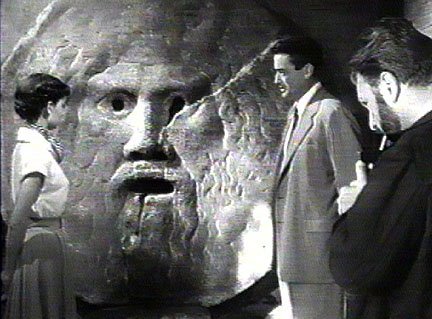


I wonder if Wyler made the choice of darkening the eyes for the movie. It makes the thing come alive like a monster. It doesn't read at all in our photos


On both our European trips I have found that I am good and ready to come home by the 9th or 10th day. I don’t know how John ever lasted 6 weeks on that tour he took in 1995. The biggest mistake I made was 5 days in Rome. 3 days would have been enough. We could have spent the other 2 in Bologna, Parma and Tuscan countryside vineyards. Trish planned the prior trip and she had us moving city to city much better than me. I hope to learn from her example in the next trip. Our preliminary goal is to see Prague and I think that trip would offer an excellent chance to see Budapest too. We can’t decide if we should visit Salzberg, Vienna and Bavaria in that trip too or head north instead to Berlin and Warsaw and make it an Iron Curtain theme.

Now I can blog Vegas

Friday, August 11, 2006

AMERICANS WILL STILL FIGHT FOR WHAT'S RIGHT

Terrific piece by a British commentator, and I think he is right. Things appear a lot different these days on the surface, but at its core, America is not far removed from its roots. We are a stable democracy rooted in an idealistic worldview that is not easily understood from abroad and should not be too quickly dismissed.

I spent the better part of a year in England and Europe. Europeans do scoff at Americans. It's as if the British still sting at their loss of global influence and can't believe they lost it to the likes of us. They consider us nouveau-riche, uncultured, arrogant, naive. To me they seemed like aristocrats without the land, hanging on to what was and feeling superior based just on a feeling of superiority. I found it all kind of stupid and pointless, and I validated their stereotypes by telling them that Americans may not be able to locate the English Channel on a map or name a British poet, but we kicked your ass sure enough. It's an argument that Americans understand. We are willing to fight, and when we fight, we fight to win. I think and hope that still defines America. We maintain our superiority through lack of subtlety, and that's precisely what I like, and the left hates, about Bush.

Even this insightful commentator can't grasp that we don't really give a rip about "winning hearts and minds." When someone shoots at us, we crush them like a bug, as we ought. That's not being a bully, it's defending liberty. You are free to shoot at us, and we are free to eliminate threats to our safety.
We are inclined, in our snobbish way, to dismiss the Americans as a new and vulgar people, whose civilisation has hardly risen above the level of cowboys and Indians. Yet the United States of America is actually the oldest republic in the world, with a constitution that is one of the noblest works of man. When one strips away the distracting symbols of modernity - motor cars, skyscrapers, space rockets, microchips, junk food - one finds an essentially 18th-century country. While Europe has engaged in the headlong and frankly rather immature pursuit of novelty - how many constitutions have the nations of Europe been through in this time? - the Americans have held to the ideals enunciated more than 200 years ago by their founding fathers.

Thomas Jefferson warned that the tree of liberty must be watered from time to time with the blood of tyrants and patriots. To the Americans, the idea that freedom and democracy exact a cost in blood is second nature.

The Americans are prepared to use force in pursuit of what they regard as noble aims. It is yet another respect in which they are rather old-fashioned. They are patriots who venerate their nation and their flag.

The idea has somehow gained currency in Britain that America is an essentially peaceful nation. Quite how this notion took root, I do not know. Perhaps we were unduly impressed by the protesters against the Vietnam war.

It is an idea that cannot survive a visit to the National Museum of American History in Washington, where one is informed that the "price of freedom" is over and over again paid in blood.

The Americans' tactics in Iraq, and their sanction for Israel's tactics in Lebanon, have given rise to astonishment and anger in Europe. It may well be that those tactics are counter-productive, and that the Americans and Israelis need to take a different approach to these ventures if they are ever to have any hope of winning hearts and minds.

But when the Americans speak of freedom, we should not imagine, in our cynical and worldly-wise way, that they are merely using that word as a cloak for realpolitik. They are not above realpolitik, but they also mean what they say.

These formidable people think freedom is so valuable that it is worth dying for.

Thursday, August 10, 2006

COULTER SUMMARIZES LIEBERMAN'S LOSS

Has America gone soft? Much of the population has never known anything but good times. The day will come, and soon, when our resolve as a nation will be tested. O that some good old American resolve will be leading this country when that day arrives. And I don't hear many (D)'s saying anything beyond "make love, not war." Michael Moore's boastful open letter yesterday promised the Lieberman treatment to any (D) who supported the war. When enemies shoot at you, what is the alternative to shooting back? What??

The security line at PHL this morning was a hundred yards long. That's inconvenient but not life-threatening. What horrible headlines would we be reading these days with Gore or Kerry at the helm?
As some of us have been trying to tell you, Democrats don't oppose the war on terrorism because they hate Bush: They hate Bush because he is fighting the war on terrorism. They would hate him for fighting terrorists even if he had a "D" after his name. They would hate Bernie Sanders if he were fighting a war on terrorism. In the past three decades, there have been more legitimate sightings of Big Foot than of "Scoop Jackson Democrats."

In Tuesday's primary, Connecticut Democrats dumped Joe Lieberman, an 18-year incumbent, because he supports the war on terrorism. This is the same Joe Lieberman who voted against all the Bush tax cuts, against banning same-sex marriage, against banning partial-birth abortion, against the confirmation of Judge Alito, against drilling in the Arctic National Wildlife Refuge and in favor of the Kyoto accords. Oh yes, this was also the same Joe Lieberman who was the Democrats' own vice presidential candidate six years ago.

The free world, which is rapidly boiling down to us and Israel, is under savage attack. Treason is rampant in the country. True, Democrats hate Bush, but they would hate anybody who fights the war on terrorism. It is a hostile world, and there is now a real question about the will of the American people to survive.

Friday, July 21, 2006

BUCHANAN REMAINS ON MESSAGE

After two days of listening to R's and D's in the House on the symbolic resolutions in support of Israel, I am no more clear what our nation's official strategic policy is in the Middle East. I do not dispute that we have a strategic interest in supporting Israel, and I am okay with establishing our own military might in the region, but for me there has always been a major disconnect between what our objectives and reasons probably are, and what our leaders say they are. I think our enemies understand our motives better than our citizens do. I think an argument can be made that this is "our war," but I don't hear that argument being articulated in the political rhetoric.

In a signed editorial, "It's Our War," William Kristol calls for America to play her rightful role in this war by "countering this act of aggression by Iran with a military strike against Iranian nuclear facilities. Why wait?"

"Why wait?" Well, one reason is that the United States has not been attacked. A second is a small thing called the Constitution. Where does George W. Bush get the authority to launch a war on Iran? When did Congress declare war or authorize a war on Iran?

Thursday, July 20, 2006

TARANTO ON THE STEM CELL LEGISLATION

On balance, we suppose we're inclined to support the legislation. But the tone of the debate gives us second thoughts--in particular, this October 2004 quote from John Edwards:
"We will stop juvenile diabetes, Parkinson's, Alzheimer's and other debilitating diseases. . . . People like Chris Reeve will get out of their wheelchairs and walk again with stem cell research."


When people who claim to be speaking out for science talk like faith healers, they risk discrediting the entire enterprise. By contrast, President Bush's approach to the question, as we noted five years ago, is nuanced and thoughtful.


Further, Bush's foes and the press frequently misstate his position, referring to a "ban on stem-cell research." In fact, the Bush policy places no restrictions on any kind of stem-cell research that does not receive federal money, or on federal funding of adult stem-cell research. It does limit federal funding of embryonic stem-cell research to those cell lines that were in existence at the time the policy was initiated, in August 2001, but prior to then there was no federal funding of embryonic stem-cell research, so that the policy actually liberalized the conditions for federal research grants. Supporters of research subsidies are asking for a further liberalization, not a reversal of a "ban."


Why do people think that the government will somehow do the research better than private industry? If stem cells have promise then a risk-taker stands to be a billionaire.

Let's remember that government gains its power and influence from problems while individuals gain their power and influence from solutions. That's why schools struggle to educate kids and grocery stores have 30 varities of mustard.

Wednesday, July 19, 2006

HOW SANCTIONS ARE AS USELESS AS THE NEW YORK TIMES
After two weeks of testimony, a jury took only a few hours to convict a South Korean national, Tongsun Park, of acting as an unregistered agent of Saddam Hussein’s Iraq. The conspiracy of which he was a part ran for 10 years, ending in late 2002, and helped one of the world’s worst regimes maintain its grip on power.

But The New York Times did not assign a reporter to his trial, its total coverage amounting to a brief wire report on the day following Mr. Park’s conviction. Of the other major national dailies, The Washington Post ran a single news-brief item, the Los Angeles Times not a word.

Given the stakes—and what the Park trial clearly demonstrated about the seamier side of the U.N.—it hardly made sense.

The most innocent explanation is that the major newspapers had simply moved on to other things, frustrated by the apparent complexity and opacity of the oil-for-food scandal, of which the Korean fixer is only one colorful part.

But some critics contend there may have been another factor: a combination of sullenness and embarrassment on the part of what bloggers gleefully disdain as “the mainstream media.”

“The oil-for-food story began on the Op-Ed page of The Wall Street Journal. The U.N. denied it had done anything wrong for the longest time, and most of the press followed its lead,” said James Bone, New York correspondent of The Times of London. “Many of the major newspapers came to the story late and are embarrassed by it.”

The media spent the time leading up to the war saying it would be a bloodbath with thousands of Americans dying and months of fighting. When the Iraqi Army laid down like lambs, the media said that everyone knew the fighting would be easy, but re-building would be impossible because you cannot force democracy.

Since the Iraqis voted in greater numbers than Americans do the frame became Bush lied about weapons of mass destruction and Saddam would have eventually fallen through the sanctions. This story shows that the sanctions only made Saddam stronger, not too unlike the way prohibition made Al Capone stronger.

Many in the media were quick to judge Bush's failure to see 9-11 coming, but they were in no way critical of Clinton's nonaction in the 1990s. It's easy to be a critic of a proactive plan, because any pencil pusher would do it differently. It's a simple economic question. You get more of the behavior you reward and less of the behavior you punish. While Bush fights terrorism I will do my part and not pay for the New York Times.

Monday, July 17, 2006

BLAIR AND BUSH at G8

A live microphone catches them unawares. . .

Bush: Yo Blair How are you doing?
Blair: I'm just...
Bush: You're leaving?
Blair: No, no, no not yet. On this trade thingy...[inaudible]
Bush: yeah I told that to the man
Blair: Are you planning to say that here or not?
Bush: If you want me to
Blair: Well, it's just that if the discussion arises...
Bush: I just want some movement.
Blair: Yeah
Bush: Yesterday we didn't see much movement
Blair: No, no, it may be that it's not, it maybe that it's impossible
Bush: I am prepared to say it
Blair: But it's just I think what we need to be an opposition
Bush: Who is introducing the trade
Blair: Angela
Bush: Tell her to call 'em
Blair: Yes
Bush: Tell her to put him on them on the spot.Thanks for [inaudbible] it's awfully thoughtful of you
Blair: It's a pleasure
Bush: I know you picked it out yourself
Blair: Oh, absoultely, in fact [inaudble]
Bush: What about Kofi [inaudible] his attitude to ceasefire and everything else ... happens
Blair: Yeah, no I think the [inaudible] is really difficult. We can't stop this unless you get this international business agreed.
Bush: Yeah
Blair: I don't know what you guys have talked about but as I say I am perfectly happy to try and see what the lie of the land is but you need that done quickly because otherwise it will spiral
Bush: I think Condi is going to go pretty soon
Blair: But that's that's that's all that matters. But if you, you see it will take some time to get that together
Bush: Yeah, yeah
Blair: But at least it gives people...
Bush: It's a process, I agree. I told her your offer to...
Blair: Well...it's only if I mean... you know. If she's got a..., or if she needs the ground prepared as it were... Because obviously if she goes out, she's got to succeed, if it were, whereas I can go out and just talk
Bush: You see, the ... thing is what they need to do is to get Syria, to get Hezbollah to stop doing this shit and it's over
Blair: [inaudible]
Bush: [inadubile]
Blair: Syria
Bush: Why?
Blair: Because I think this is all part of the same thing
Bush: Yeah.
Blair: What does he think? He thinks if Lebanon turns out fine, if we get a solution in Israel and Palestine, Iraq goes in the right way...
Bush: Yeah, yeah, he is sweet
Blair: He is honey. And that's what the whole thing is about. It's the same with Iraq
Bush: I felt like telling Kofi to call, to get on the phone to Bashad [Bashir Assad](9a and make something happen
Blair: Yeah
Bush: [inaudible]
Blair:
Bush: We are not blaming the Lebanese government
Blair: Is this...? (at this point Blair taps the microphone in front of him and the sound is cut.)

The close relationship hasn't been harmed by the media's negativity toward Iraq.

Wednesday, July 05, 2006

A History of Violence (A Movie Review)

Viggo Mortensen has an impressive range. Having recently seen him as the no-good brother in Sean Penn’s INDIAN RUNNER, you would think he would be forever typecast as the loser. Here he plays the mild-mannered husband, father and small businessman and he plays it note perfect. When his restaurant is invaded by gunmen, his defeat of those thugs is a great heroic movie moment. As the rest of the movie unfolds, Viggo’s range is tested as he reveals more of his true self. He should have been nominated.

Unlike other movies based on graphic novels such as Sin City, and The Road to Perdition, a History of Violence doesn’t have that overly stylized art direction that takes you out of the realness of the story. Cronenberg makes up for this by inventing his own things to take you out of the story. For instance, Maria Bello and Viggo Mortensen by their actions do not seem to have been together long enough to have produced a high school aged son. There is some sort of excitement between them that exists in the world of newness. It seems like he is just recently in her life or he just returned from war.

When the violence heats up, we expect as an audience to see some gore, but sometimes the gore we see is stylized in the slasher movie mode instead of the cops and robbers mode. It draws too much attention to that style and leads you away from the act.

But the only truly groaning preposterous part of the film is the affectedness of William Hurt’s performance. Of course, Hurt made his career playing the driest of leading men and his attempt to give a character some spice is so offbeat and comic it just doesn’t match the action happening simultaneously.

The last thing, though minor, is that the son overcomes a bully we're to believe because he is the son of Viggo and inherited the same prowess. The only problem is that the actor that plays the son isn't quite right for the kind of transformation and it seems forced rather than natural.

For all I know maybe these are elements of graphic novels that fans have long ago forgiven or even expected, but this was actually a good idea and a more decent story than the average movie and I think that those certain elements detract from the overall result.

It’s a bubble film for me. Sometimes I watch these movies again and they grow on me enough that I forgive the imperfections. Other times, the imperfections scream louder subsequent times and I write them off. I’m wondering where this one will take me.

I've seen FORREST GUMP on TV a few times in the last couple of years, and though it was a movie that I critical of the time, especially Hanks voice choice for the character, I have since come to admire and enjoy it. Go figure.
WEEKEND SPORTS

I watched or listened to most of the ladies Wimbledon matches yesterday as we were working on the rental house. Most interesting was the match between the diminutive (by Tennis standards) Justine Henin-Hardene and the 26th year old French player Severine Bremond. Bremond had to play three qualifying matches just to get into the tourney and then beat three higher ranked opponents to get to the Belgian born Hardene. The tenacious Hardene recently won the French Open and had won every major except for Wimbledon and this looks like her year and yet this unknown gave her the toughest match yet, 6-4,6-4. We also learn in the match that Severine didn’t take up tennis seriously until she was 18 (Tracy Austin won the U.S. Open at 16). If she were 19 or 20, they’d be talking her up as a rising star. Since she is already 26, was this her only chance?

On the men’s side it was tough seeing Andre Agassi losing in his last appearance. He’s become such a gracious player and good all around guy in ways the brash Connors and McEnroe never quite could, though I always liked both of those guys with the edge to Connors and his sweaty bangs. In that era, I use to bang a tennis ball against the garage door for hours letting my bangs hang over my eyes pretending to be Jimmy. American Tennis domination is over with Sampras and Agassi gone and Roddick not quite good enough to beat Nadal and Federer. Those two in the final as a rematch of the French Open would make great sport.

I haven’t played the game in a few years, because it sometimes inflames my back injury. Watching these past few weeks has made me begin to miss it again.

After Tennis I turned it over to the World Cup where Germany and Italy were trying to break the scoreless tie in their first overtime period. Though I immediately began rooting for Germany and their superior beer, Italy made things happen and scored two quick goals in the second overtime. I’m at least grateful that it didn’t end with an anti-climactic penalty kick.

American football doesn’t break a tie very well either, I think. I don’t like the NFL’s Sudden Death, because it comes down to a coin flip. College Football’s recent tie-breaker is even worse, because it can cause so much scoring that the final score doesn’t even reflect the overall experience of the game. Why not just play an entire quarter to decide the outcome? If that doesn’t work let it end in a tie.

Monday, July 03, 2006

OH SAY CAN YOU SING

Two thirds of Americans do not know the words of The Star Spangled Banner. And we care nothing about futbol. But we will whup anyone in a fair fight, until proven otherwise.
FLAG BURNING

This is just the kind of election year emotional issue that is supposed to distract us from issues like the Social Security insolvency and a war the press doesn’t support. It’s such a non-issue that I wonder how many people have actually even seen a person burn a flag in protest.

On the other hand, those against the amendment seem very worried that it’s a ban on speech. What bothers me is the same critics are usually quiet as mice when actual verbal speech is restricted. If we decide to stretch speech to mean any overt act of expression, then it seems that actual verbal speech (covered specifically in the constitution) has to be protected at the very least at equal levels. The campaign finance reform laws are a much more serious breach of the constitution than the protection of a few marginal characters that want to do something rebellious.

Those who love campaign finance reform because they think their side is under funded in the realm of campaign speech may also protect flag burners simple because they make up a part of their constituency. Instead of an amendment, maybe the Supreme Court needs to address the flag burning issue again and explain why flag burning is a more important political tool than the ability to promote the positives or negatives of a candidate for public office.

Friday, June 30, 2006

THE RULE OF FOUR (A Book Review)

I used to dream of a life of scholarship, sipping tea and reading the classics in my mountain cabin. My senior year of college, I signed up for Beginning Greek with that in mind. When I traveled across Europe during 1987-88, I'd spend hours in and around the large, ornate libraries and museums, just soaking in the majesty of old books, art, and architecture.

THE RULE OF FOUR, written by two best friends who at the time were recent Ivy League graduates, presents another view of that life, one marked by fanaticism, frustration, social isolation, and the single-minded pursuit of the accolades of a very small group of fellow academics whose interest in your work is motivated mostly by jealousy. The protagonist also finds that he can love his work or his lady with all his heart, but not both. Maybe the contemplative life is not so attractive after all.

The authors convey their love for, and application of, scholarship, but unfortunately I was looking for a good story, not a textbook, and I never found myself caring very much about the plot. Perhaps the youth of the authors limited the richness of the story. They captured quite well, for example, the rush a young man feels when a certain girl casts a certain glance wearing a certain sweater, but not the more mature emotions that sustain an enduring love.

2 stars (of 4)

Saturday, June 24, 2006

3 NIGHTS IN AUGUST (A Book Review)

I usually try to read a baseball book every summer, and this year's WILD AND OUTSIDE left me wanting, so I picked up 3 NIGHTS IN AUGUST at O'Hare yesterday and finished it today, thanks to lengthy delays in Chicago caused by Cheney's visit.

About 70 pages in, I was thinking this book was displaying the intricacies and skill of writing about baseball more than it was actually writing about baseball -- that is, that the author was showing off his own abilities rather than showcasing the game or the manager on the cover. But by page 105, heading into Game 2 of the 3-game Cubs-Cardinals series, I was enjoying a very good baseball book in the tradition of Daniel Okrent's terrific NINE INNINGS. Author Buzz Bissinger (FRIDAY NIGHT LIGHTS) takes the same approach and pulls off the same result, albeit with a less colorful cast of characters.

3 NIGHTS is what every good baseball book is -- part history, part play-by-play, part personalities, part psychology, part humorous anecdote, part hero against the odds, and a big part pure old-fashioned love of the game.

Highlight Reel:

- Baseball is a game of such complexity, such unpredictability, such cruel surprises. The unlikeliness of a pitcher on a bad ankle, barely able to run, coming to bat three times and putting the ball in play three times with the game's outcome potentially on the line three times. The allure of the game is how, when you soak in it, you begin to appreciate how every little 3-game weekend series contains, and makes, so much history. Every game is a million storylines and every at-bat a strategic case study.

- At the time of this series, the Cards were in a virtual dead heat with the Cubs and the Astros in the NL Central. I so enjoyed the Cubs' bullpen blowing the second game of this series, the outcome of the third game hinging on a Cubs-lose collision at home plate, and knowing how the Cubs ultimately gave away the division and the wild card by tanking in late September, culminating in Sammy's infamous no-show at the season finale. Whenever I watch the Cubs, I always root for them to lose in some uniquely humiliating fashion. I don't know why. I don't root for any other team to lose like I root for the Cubs to lose. I guess I just think it's a more compelling story when a Curse remains intact. I would like it better if the Red Sox were still trying to beat the curse, year after heartbreaking year. Beating the curse is great for a day and then a great story is gone forever, and I mourn the loss.

- The depiction of Darryl Kile's death brought tears to my eyes, and the skewering of Jose Canseco as a self-serving slug made me laugh aloud. Awash in cash and far removed from the love of the game that still brings La Russa to the ballpark, Canseco wondered aloud in October 1990, "Why is it always us that has to go to the playoffs?" Managing today is not what it used to be: managers can preach there's no "I" in team, but players know there's an "m" and an "e" and that's how they get paid.

- Bissinger's scathing denunciation of MONEYBALL is worth a trip to Borders to read the Afterword.

Bloopers:

- The book is set in the 2003 season and was published after the 2004 season, so it lacks the historical perspective that makes ballplayer portraits so engaging in other books like this.

- The 2003 Cardinals were a talented but bland team. La Russa, Pujols, Rolen and company may have a lot to say but you'll never find out.

- The author at times gets a little too impressed with himself. This is good: "Morris steps off the mound and walks a few feet as Sosa rounds the bases, not dawdling, but not setting any speed records, adding his own tenderizer to the slab of beef that Morris just served up." This is not: "In his multiple roles of Doctor Phil, Doctor Ruth, and Doctor Seuss, La Russa wondered whether what Morris felt was pretty simple." What the hell does that mean? Mark Prior's sideburns are "so long and straight you could land an airplane on them"? That's just stupid.

All in all, a good solid read. Not a must read and not a waste of time.

3 stars (of 4).

Thursday, June 22, 2006

HOMOPHOBIC? REALLY?

Lots of chat yesterday on the sport talk channels about Ozzie Guillen's "homophobic" epithet directed at a sportswriter he doesn't like. I haven't heard anyone contest that the remark was made, or that the target is indeed gay, so apparently the fact pattern is clear.

What I don't get is why the comment is necessarily "homophobic"? Derogatory, yes. In poor judgment, sure. In poor taste, okay. But why has every commentator made the leap from derogatory to homophobic? Are we really to believe that Ozzie is *afraid* of the fellow's sexual orientation? I rather doubt it. It's PC gone mad when jocks can't rip homos-- I mean, those who are born that way and did not choose alternate lifestyles, not that there's anything wrong with that-- in the locker room without taking an all-day beating in the press. Not that he should have, only that it's not that big a deal.

Wednesday, June 21, 2006

WHY LIBERALS FEAR GLOBAL WARMING MORE THAN CONSERVATIVES DO

A winning piece by Dennis Prager.

Observers of contemporary society will surely have noted that a liberal is far more likely to fear global warming than a conservative. Why is this?

Here are six more likely explanations [than the "anti-big business, compassion for human life" reasons liberals typically give]:

-- The Left is prone to hysteria. The belief that global warming will destroy the world is but one of many hysterical notions held on the Left. As noted in a previous column devoted to the Left and hysteria, many on the Left have been hysterical about the dangers of the PATRIOT Act and the NSA surveillance of phone numbers (incipient fascism); secondhand smoke (killing vast numbers of people); drilling in the remotest area of Alaska (major environmental despoliation); and opposition to same-sex marriage (imminent Christian theocracy).

-- The Left believes that if The New York Times and other liberal news sources report something, it is true. It is noteworthy that liberals, one of whose mottos is "question authority," so rarely question the authority of the mainstream media. Now, of course, conservatives, too, often believe mainstream media. But conservatives have other sources of news that enable them to achieve the liberal ideal of questioning authority. Whereas few liberals ever read non-liberal sources of information or listen to conservative talk radio, the great majority of conservatives are regularly exposed to liberal news, liberal editorials and liberal films, and they have also received many years of liberal education.

-- The Left believes in experts. Of course, every rational person, liberal or conservative, trusts the expertise of experts -- such as when experts in biology explain the workings of mitochondria, or when experts in astronomy describe the moons of Jupiter. But for liberals, "expert" has come to mean far more than greater knowledge in a given area. It now means two additional things: One is that non-experts should defer to experts not only on matters of knowledge, but on matters of policy, as well. The second is that experts possess greater wisdom about life, not merely greater knowledge in their area of expertise.

-- People who don't confront the greatest evils will confront far lesser ones. Most humans know the world is morally disordered -- and socially conscious humans therefore try to fight what they deem to be most responsible for that disorder. The Right tends to fight human evil such as communism and Islamic totalitarianism. The Left avoids confronting such evils and concentrates its attention instead on socioeconomic inequality, environmental problems and capitalism. Global warming meets all three of these criteria of evil. By burning fossil fuels, rich countries pollute more, the environment is being despoiled and big business increases its profits.

-- The Left is far more likely to revere, even worship, nature. A threat to the environment is regarded by many on the Left as a threat to what is most sacred to them, and therefore deemed to be the greatest threat humanity faces. The cover of Vanity Fair's recent "Special Green Issue" declared: "A Graver Threat Than Terrorism: Global Warming." Conservatives, more concerned with human evil, hold the very opposite view: Islamic terror is a far graver threat than global warming.

-- Leftists tend to fear dying more. That is one reason they are more exercised about our waging war against evil than about the evils committed by those we fight. The number of Iraqis and others Saddam Hussein murdered troubles the Left considerably less than even the remote possibility than they may one day die of global warming (or secondhand smoke).

One day, our grandchildren may ask us what we did when Islamic fascism threatened the free world. Some of us will say we were preoccupied with fighting that threat wherever possible; others will be able to say they fought carbon dioxide emissions. One of us will look bad.

ROBERTS ADVOCATES NARROW RULINGS AND CONSENSUS -- EGAD!!

E.J. Dionne speculates that Chief Justice John Roberts is going to be a big disappointment to conservatives.

I am repeatedly reminded of Plato's Republic when I read political commentary. Socrates argued that the philosophers should govern because, well, they're the smartest. Most pundits, both (D) and (R) still believe this. They fear the will of the people; they just want their own ideology to prevail. The people, after all, are too stupid to know what is good for them.

President Bush said he would appoint justices who would uphold the rule of law and not try to legislate (their own social agenda) from the bench. He must have said that a hundred times. Roberts takes the bench and says he will do that. What is the big surprise? And what is the threat? The primary task of the Supreme Court is to determine Constitutionality, not to comment on, and certainly not to redirect, legislative intent. These comments by Roberts are not inflammatory or disappointing -- they are exactly what any justice should say, and they are a profoundly positive step in the right direction for the Supreme Court.

Roberts' speech [last month at Georgetown] defended the virtues of judicial humility: Justices should try to make the narrowest possible rulings and strive for unanimity, or something close to it.

"If it is not necessary to decide more to dispose of a case, in my view it is necessary not to decide more,'' Roberts said. Thus the Roberts Rule of Orderly Judging: The less the court decides the better.

And there was this corollary: "The broader the agreement among the justices, the more likely it is that the decision is on the narrowest possible ground.''

"The rule of law is strengthened,'' Roberts insisted, "when there is greater coherence and agreement about what the law is.''

Monday, June 19, 2006

AVERAGE AMERICAN MORE POWERFUL THAN SELF-ACTUALIZED FRENCHMAN

I suscribe to the wonderful travel magazine, "Budget Travel". Recently a reader sent in an incredible story. The reader stated that she and her husband were visiting France recently. They were leaving a restaurant after dinner when a fire broke out at nearby apartment complex. To their horror, a woman was hanging out over her balcony screaming for help. The heat became unbearable and she jumped only to have her leg caught in between the railing on the balcony below. She was hanging upside down screaming. The American woman/reader stated that she screamed, "Somebody do something!" To her surprise, her middle-age overweight husband, leapt into action. He scaled the two stories of the building on a fire escape, pulled the woman up and put her on his back. Then proceeded to scale back down when the upstairs windows exploded showering him with glass. Cut and bleeding, he did not drop the woman but successfully brought her down to the ground when (about 20 minutes later) fire rescue finally arrived.

As he was being treated for his cuts a French woman came over, "I knew you must be American by your white socks and courage. All the French men were standing around doing nothing while you risked your life for a women you didn't even know in a country that is not yours."

This letter really made me smile. Here is an average guy showing the great American spirit that is still alive and well....even in an overweight, middle-aged dude.
BRITISH ATTACKING BELIEFS OF HONEST AMERICAN

Recently I got this email from a crazy Brit:
Hi, just read an Amazon review of yours in which you use the phrase 'muddled left-wing environmentalism'. What's the connection? Why is environmentalism 'left wing' ? Why is a left-wing position muddled? And what's wrong with 'left-wing' per se anyhow? You associate with a Christian position, the message of Jesus is about compassion; you popagate the Divine, but the Divine is most immediately known in the (God created) environment around us. To oppose compassion is anti-Christian;to harm our environment is blasphemy. The real muddle seems to me to claim to be a Christian while dismissing political compassion (the 'left' in politics) & environmentalism (which works toward greater respect for God's creation. Wishing you light. J


What the????? Here is my reply:
My dear June:
Oh I completely agree! It is not wrong to love and care for the environment in any way. I am very much a conservationist in the Teddy Roosevelt mold. What I do not like about the left-wing environmentalist movement in this country is that it is mostly run by a bunch of city dwellers who have no respect for individual property rights (one of the many things we fought the British for back in the day). Further, current left-wing policy would place all property not now developed (including private land) into a kind of museum free from Human influence of any kind, which is utterly ridiculous. I do believe that humans are as much a part of this world as any animal and plant. We certainly have a duty not to destroy the world or vital habitat, but not at the expense of Jobs and Freedom! Finally, I have in no way connected my Christian beliefs to these political views. That is your projection. I'm a bit more complex than that. I recommend you read http://www.heritage.org/Press/Environmental-Policy.cfm for a more informed understanding of what is going on in this area. Further, are you writing me from England? If so, we kicked King George's butt one time on these issues, I guess we're going to have to do it again.
Sincerely yours,
W. Steven Saunders


'nuff said!

Friday, June 16, 2006

HANSON NAILS IT AGAIN

How could the war not be the defining issue in the next 2 elections? And how could the party that wants to lose the war possibly gain the support of a majority of Americans? I just don't see it happening.

The costs in Iraq have been high and the losses tragic. But nothing in the past three years has convinced me otherwise than that in a post-September 11 world Saddam had to be removed on ethical and strategic grounds;

or that the insurgency, though unexpected in its intensity, could be put down by a U.S. military that would react and evolve more quickly than the terrorists to changing conditions on the ground;

or that our mistakes, though several and undeniable, are tragically the stuff of war, and so far have not proved to be irreversible or beyond what we experienced in any of our past efforts;

or that the maligned secretary of Defense was right about troop levels and the plan for Iraqization — although demonized for trying to transform the very nature of the American military in the midst of a war;

or that we are engaged in the great humanitarian effort of the age, as “one person, one vote” has brought to the perennially downtrodden Arab Shiites a real chance at equality;

or that the best method of winning this global struggle against fascistic Islamic terrorism remains fostering in the Middle East a third democratic alternative between autocracy and theocracy that alone can deal with the modern world.

Once a democratically elected Iraqi government emerged, and a national army was trained, the only way we could lose this war was to forfeit it at home, through the influence of an adroit, loud minority of critics that for either base or misguided reasons really does wish us to lose. They really do.